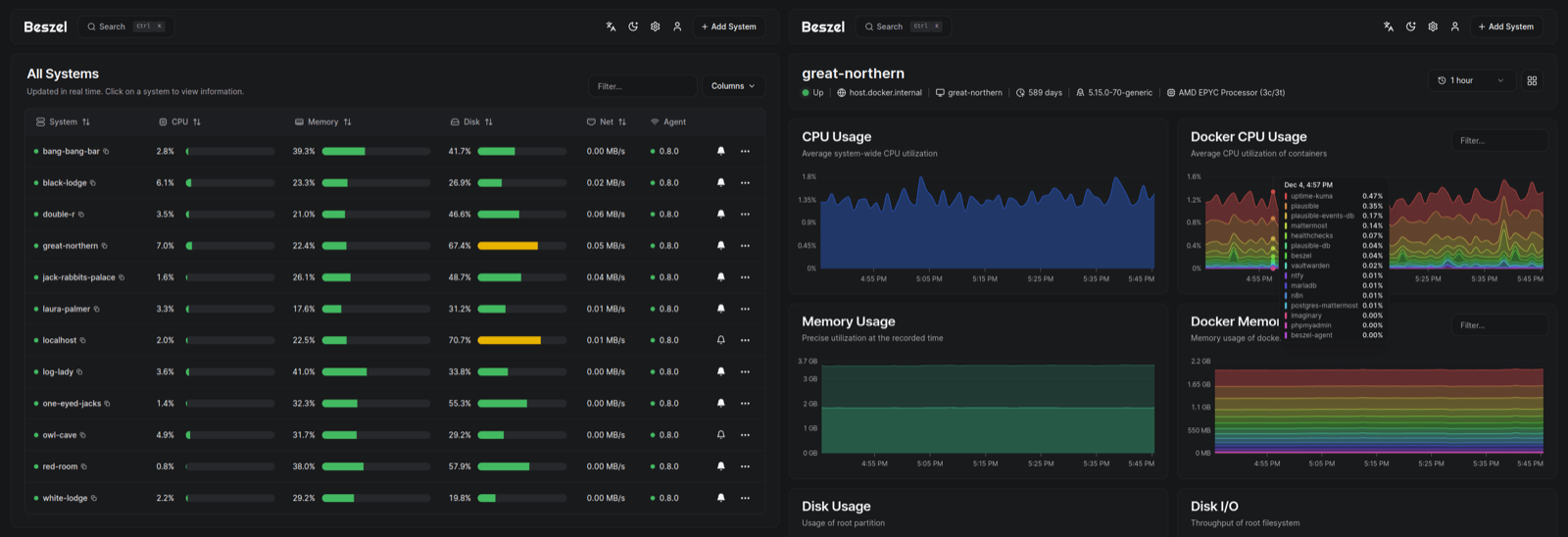
Beszel, the hub-and-agent monitoring stack known for staying small, shipped version 0.21.0 on October 2 with a batch of additions that all answer the same question: what is about to bite me that I cannot see yet. The project keeps its lightweight shape, and the release drew ten first-time contributors alongside the usual hands.
The new checks
The system page now lists pending package updates, which turns patch debt into something a dashboard can show before a maintenance window discovers it. Wi-Fi signal strength is monitored, which matters mostly for the devices that live where cables do not go. HTTPS network monitors can check TLS certificate expiry, the classic surprise that arrives with a weekend attached. Systemd service logs are readable from the service details view, so a failed unit does not require opening a terminal first. DNS monitors can pick which server they query, and the network monitor got comparison views, across systems and within one system, for people running two paths to the same place.
The rest of the additions are small quality-of-life: bandwidth alerts in chosen units, a log timestamp toggle, a hub option to skip SSH fallback entirely, sync of system names with hostnames, and a toggle to stop the container-image update checks. The active-alerts grid became a banner and sheet, packet loss renders as a red line, and flags render reliably now that a Twemoji font is bundled.
The fixes
The fix list is worth a skim for anyone with older hardware in the rack: LVM volumes now map to disk I/O through device symlinks, ZFS pool I/O includes snapshot reads, the first sample of an interval no longer reports nonsense disk I/O, and 32-bit disk-time counters no longer wrap. NVMe SMART data handles partial responses, and power-cycle counters stop overflowing. Intel GPUs are monitored by parsing intel_gpu_top JSON output, LXC guest CPU usage comes from cgroup accounting, Windows volume names stay intact, and a list of WebSocket reconnect issues is closed, which is the kind that quietly breaks alerting.
My read
The pattern of this release is monitoring the things that go wrong outside the box: Wi-Fi in the far corner, a certificate expiring, a service that died at 3am, updates nobody applied. None of it is flashy, and that is the point of Beszel: the dashboard stays quick, the agent stays small, and the checks land where incidents start. The ten first-time contributors suggest a project in good health. If you run it, take the update from the panel; if you do not, this release is the best case for trying it on the box you have been meaning to watch.
Source: the release.