
Pi, the minimal agent harness from Earendil, shipped version 1.0. The project calls it the point where Pi is “a stable piece of software that people and businesses can depend on,” and says hundreds of thousands of people use it weekly. The release is a short list held back on purpose, paired with a second, experimental ship: Pi Durable, for agents that outlive the terminal they started in.
What 1.0 adds
It adds Codemode (native MCP support, plus non-LLM models like Jev and image models), extensions that can define virtual models, deferred tool loading, cache warming for Anthropic models, mid-conversation system messages so prompts and tools can change without breaking the prompt cache, a new TUI theme, and full-screen mode by default.
The MCP part has a history: Pi made its name partly as the harness that proudly did not support MCP, and this week it published a post walking users through the reversal. MCP now lands in the core through Codemode, a JavaScript sandbox that orchestrates tool calls on the harness side. Earendil frames the sandbox as the difference between dumping tools into context and composing them: in their words, MCP in Pi is “just built on exposing those tools to a JavaScript sandbox like other harnesses like Codex do too.”
Pi Durable
Pi Durable is the more interesting ship if you have watched an agent die mid-task. Every step checkpoints before it moves on, so a new process can open the same storage and continue from the last one after a crash: cut-off model requests are sent again with the partial answer marked aborted, tool calls rerun only when the tool declares that safe, and submissions carry a requestId so a client that retries gets the original answer, not a duplicate. Conversations can fork at any point without copying their history; the project’s example is a Slack channel spawning a thread. Several clients can attach to one harness while it runs. Storage ships as memory, SQLite or JSONL, the package is about 15,000 lines so “your agent can read it,” and it installs from npm.
Running it
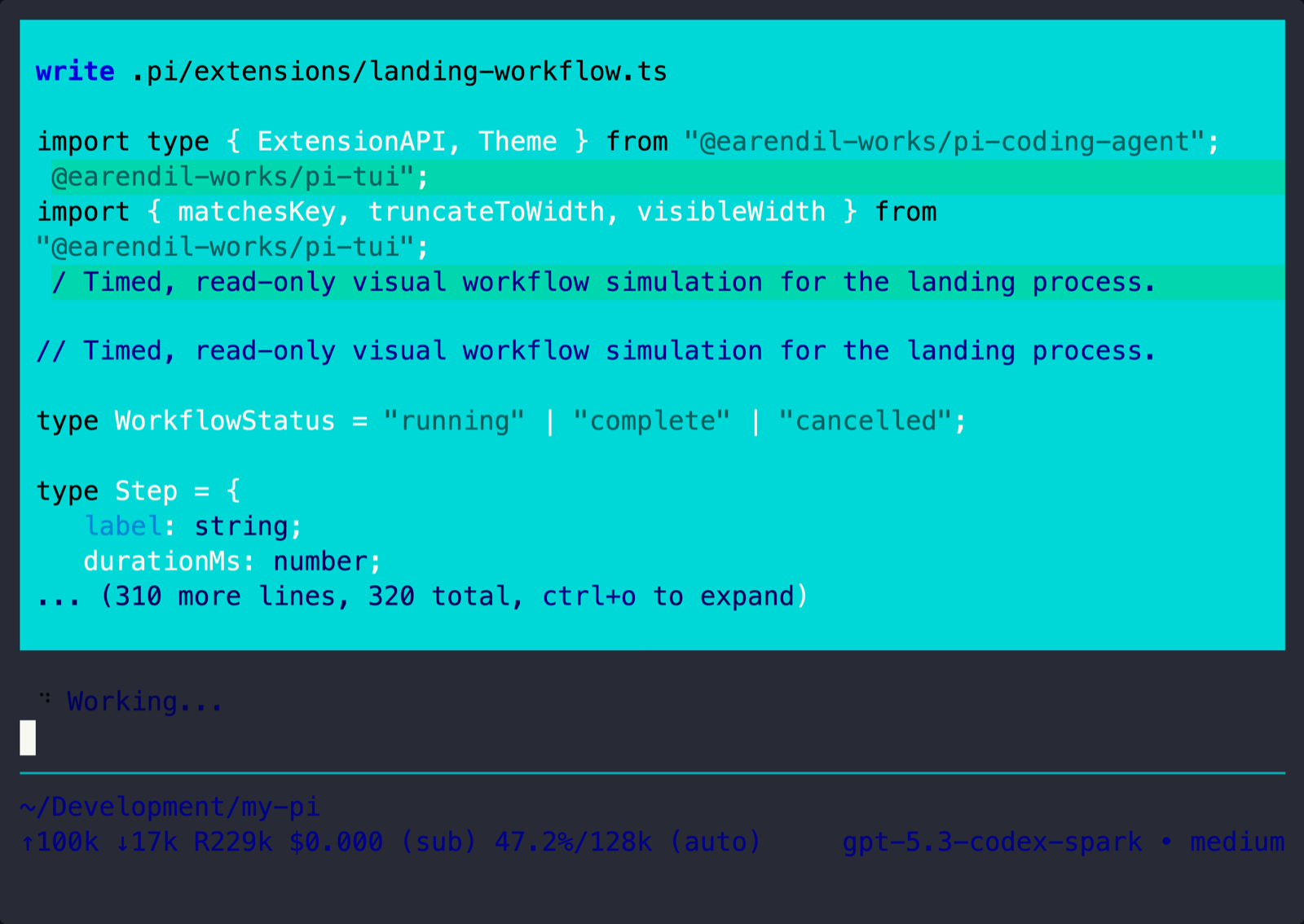
Both releases are MIT licensed. Pi installs with one command, curl -fsSL https://pi.dev/install.sh | sh, and Pi Durable with npm install @earendil-works/pi-durable @earendil-works/pi-ai @earendil-works/chord. One caveat before you run it anywhere sensitive: Pi has no built-in permission system and runs with the permissions of whoever launched it. The project’s answer is to containerize it; the docs ship three patterns, including a micro-VM one that keeps provider credentials on the host.
My read
The discipline is what stands out: the announcement says the features that shipped “were thrown up against the wall and stuck,” and that “the list of things that fell off the wall is much longer,” a strange and healthy thing to say in a year when everyone ships weekly. Durable is the piece to watch. Agents that treat crashes as routine and conversations as things you fork are where this category is heading, and experimental is the right label to start from. If you run Pi, 1.0 is a clean upgrade; if you have wanted an agent that survives a closed lid, this is the first step, and it says so.
Source: the 1.0 announcement, the Pi Durable post and the repository.