
If your media stack still has a Jellyseerr container in it, its paperwork changed this year: the Jellyseerr and Overseerr teams merged in February into one project, Seerr, which now ships a single request manager for Jellyfin, Plex and Emby. One codebase, one roadmap, one migration to think about.
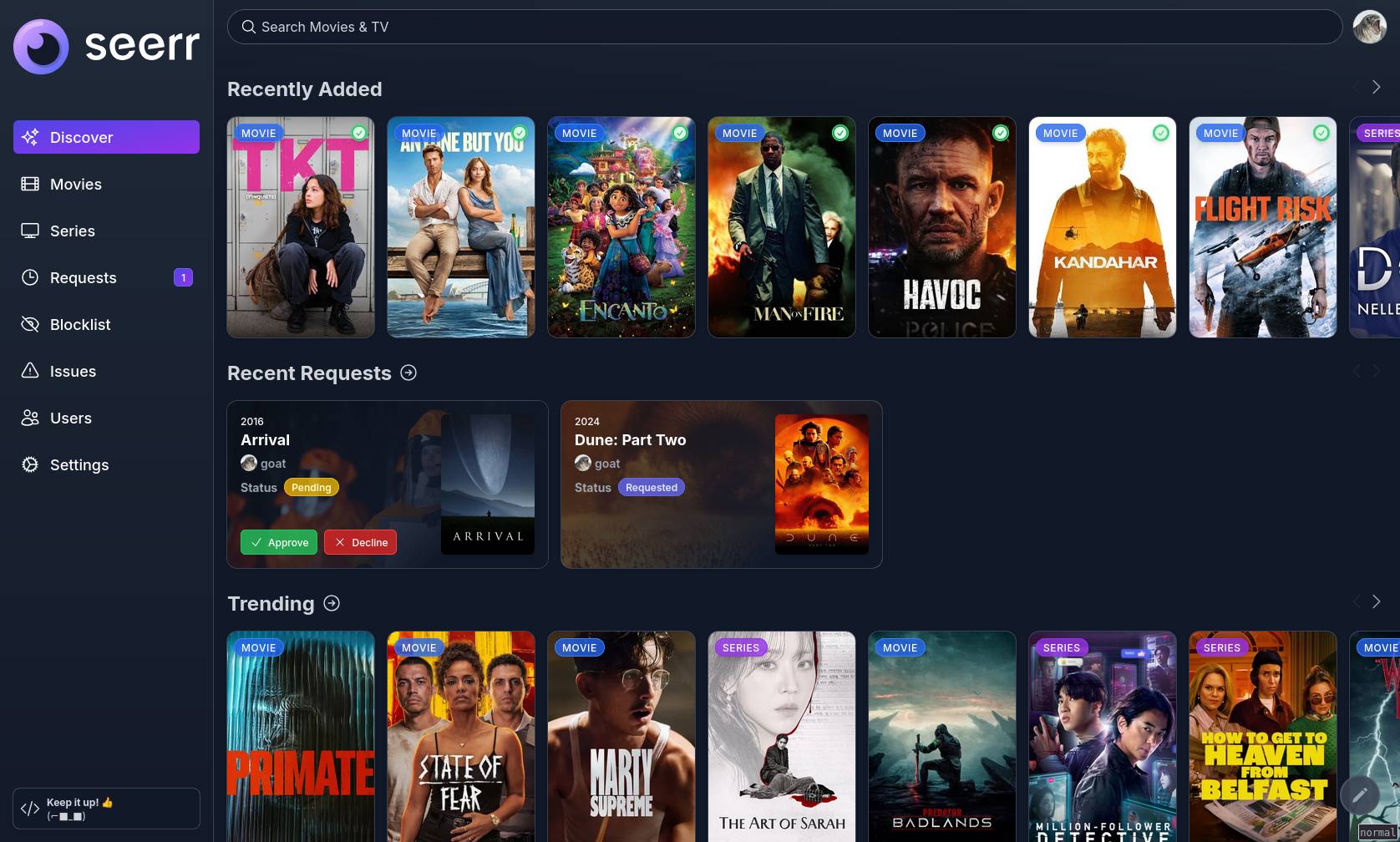
What the merge means
For Overseerr users, Seerr is the features Jellyseerr had built all along: Jellyfin and Emby alongside Plex (one media server per instance), PostgreSQL as a database option, blocklists and override rules, TheTVDB metadata so season numbering finally matches Sonarr’s, and DNS caching, which the release notes recommend specifically to people running Pi-hole or AdGuard Home. For Jellyseerr users it is the same feature set, now maintained by the combined team. The migration guide covers the move from either predecessor; if you have been putting the rename off, it is the one document you owe yourself.
Where the project stands
The months since the merge have had a shape. February’s v3.1.0 was a critical security release. It patched three CVEs, one of them specific to instances configured with Plex, and it marked the end of the post-merger feature freeze. June brought v3.2 and v3.3 with the TVDB and caching work; the stable line has rolled to v3.4.1. Behind it runs a preview train every couple of weeks: watchlist syncing, override-rules matching, a media-server migration path, and the newest addition from 8 September, a rework of authentication around OpenID Connect, where the latest commit signs the session cookie store with the session secret rather than the OIDC client ID. Previews are previews, for lab boxes rather than the family server, but they are where the project’s next version is being finished in public.
My read
Request managers are thankless infrastructure: nobody notices the day they improve. What the merge traded is worth noticing, though. Two project cultures, one codebase, a name that no existing container tag matches — that is a cost paid once, at the start, to end the era of features landing in one fork and not the other. If you are still running Jellyseerr, the guides are the boring part and the point is everything after them: one project, moving.
Sources: the Seerr release announcement and the newest preview branch